Today we sat down with Charles Kodors, P.Geo. Manager of International projects at Brunswick Exploration. The company recently announced a impressive Spodumene discovery in Greenland
From a geological perspective, what distinguishes Greenland as a region of interest, particularly for those unfamiliar with its unique attributes?
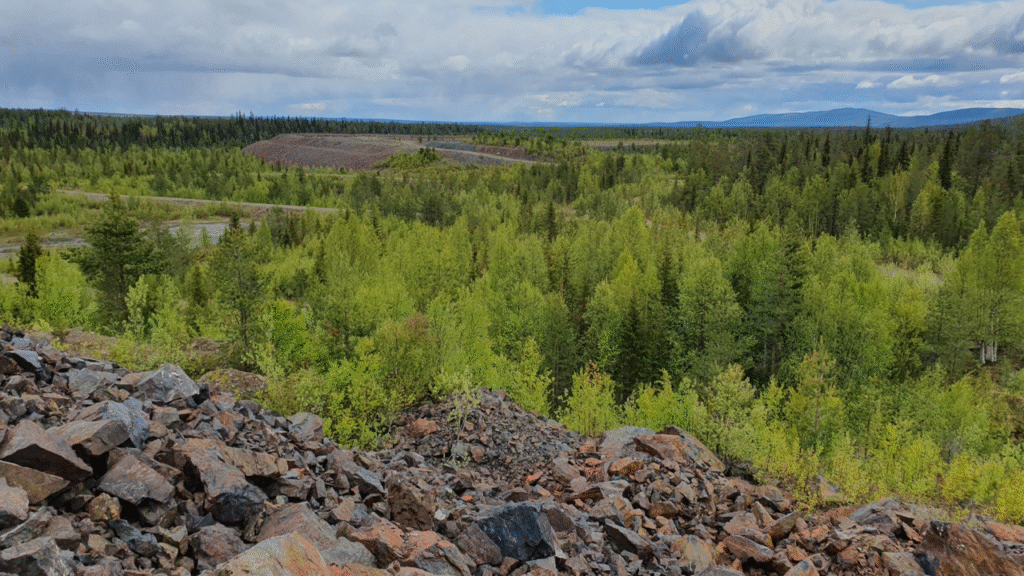
Geologically, it is just as good as Canada, containing rock that extends from Nunavut, Labrador and Newfoundland. What sets Greenland apart is its world-class outcrop exposure and lack of exploration doubly so when it comes to lithium. Due to this, pegmatites can easily be identified by satellite imagery and prospected rapidly. These characteristics are unique globally.

What does the typical exploration process in Greenland entail? To what extent are helicopters essential for accessing licensed areas, or are there alternative logistical methods?
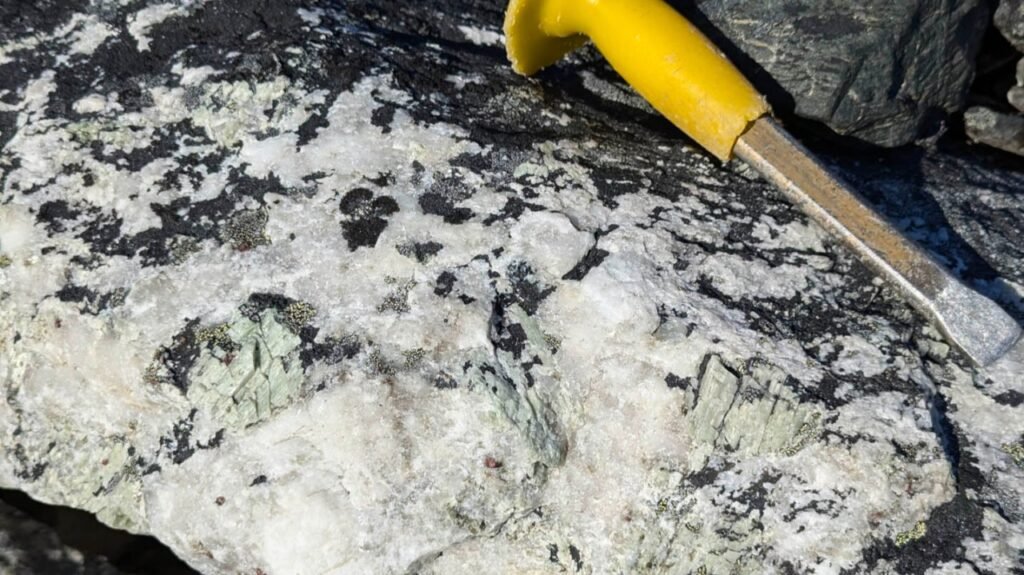
Our program in Greenland is the same strategy and process that BRW executed across all of Canada, which led to discoveries at Mirage, Elrond, Anatacau, and now Nuuk. We begin with in-house target generation, followed by boots-on-the-ground prospecting and hand-held pXRF analysis. This process allows for rapid and efficient coverage of our targets to ensure that poor targets are discarded, and promising targets are further advanced. While some areas can be accessed by boat along the coast and in fjords, it is far more efficient to explore and access targets by helicopter.
Despite facing challenging market conditions, Brunswick remains steadfast in its commitment to lithium. What drives this dedication, and is there a clearly defined long-term strategic vision supporting it?
BRW is made of explorationists at heart, and as such, we simply cannot ignore this generational opportunity for lithium worldwide. Compared to precious and base metals that have been explored for hundreds of years, lithium exploration has barely begun. While it is a juvenile market containing tight and volatile swings compared to more established commodities, the fundamentals remain strong with ever increasing demand underpinning continued growth in the industry. EVs are only part of the story, the true surge in demand will come from stationary storage from solar, wind and other forms of renewable power generation. The vision is to continue to push new jurisdictions, advance exciting assets, and become a household name in lithium exploration. We have developed an in-house expertise that is second to none, and we will continue to search for lithium. All options are on the table, and we will do what’s best for the shareholder.

Can you share the origin story of your exploration efforts in Greenland? Who first identified the opportunity to search for spodumene there, and what were some of the key challenges the team overcame to reach this stage?
Killian Charles , President and CEO, first postulated Greenland for its strong mining jurisdiction and exploration potential. After searching for lithium across Canada, much of the geology extends east into Greenland and is just as prospective. For us in North America, Quebec has such a staggering lithium endowment that it could meet nearly all of the continent’s forecasted lithium demand. However, Europe is not so lucky and with similar forecasted demand growth, we saw Greenland’s ties to Europe via Denmark as a key advantage to any exploration success in the country. At a macro level, we determine where lithium will be needed, then look for sound mining jurisdictions, followed by solid geology. As with any new province, country, or jurisdiction, the challenge is the time to learn the Mining Act and laws while entering the country administratively. This process is something that BRW is very accustomed to at this point and further differentiates us from our peer group.